



When Your HRT Patch Is Out of Stock: The Menopause Anxiety Nobody Talks About

Imagine finally finding something that makes menopause feel manageable.
Perhaps it took several GP appointments to get there. Maybe you tried one dose, changed it, tried another formulation and eventually landed on the patch that seemed to suit you. You know when to change it. You know how your body responds to it. For the first time in months, perhaps even years, menopause feels slightly less unpredictable.
Then you go to collect your repeat prescription.
"Sorry. We can't get that one at the moment."
For women who rely on hormone replacement therapy, those few words can produce an extraordinary amount of anxiety. And if you've noticed women talking about exactly this in menopause groups lately, you're not imagining it.
The UK really has experienced continuing supply problems affecting some HRT products. As of August 2026, the NHS Business Services Authority still lists Serious Shortage Protocols for four strengths of Estradot estradiol patches: 25, 50, 75 and 100 micrograms, currently scheduled to remain in place until 2 October 2026. The protocols allow pharmacists, in defined circumstances, to supply specified alternative estradiol patches instead of sending every affected woman back to the original prescriber.
That's an important distinction. Britain isn't experiencing a total shortage of HRT, and women shouldn't panic that hormone treatment is suddenly disappearing. But for women who rely on a particular brand, strength or delivery method, availability can still become another thing to worry about at precisely the stage of life when they could probably do with fewer things to worry about.
Why Are Some HRT Patches Difficult to Get?
Demand for HRT has increased enormously. Greater menopause awareness, more women seeking treatment and major changes in the public conversation have encouraged women who might once have struggled silently to ask for help. That's unquestionably positive. But enormous changes in demand also place pressure on manufacturing and medicine supply chains.
Official NHSBSA statistics show that 14.7 million HRT items were prescribed in England during 2024/25, an 11% increase on the previous year, with an estimated 2.8 million patients receiving prescriptions. More recent NHSBSA work reports that a record 2 million women aged 40 and over received NHS HRT prescribing in 2025/26, more than double the equivalent figure five years earlier.
Supply problems aren't necessarily caused by one thing. Manufacturing capacity, production delays, availability of ingredients or packaging, distribution and unexpectedly rapid changes in demand can all affect medicines. The important point for women using HRT is considerably simpler: sometimes the prescription you have in your hand and the product actually sitting on the pharmacy shelf are not the same thing.
Estradot Has Had a Particularly Long Supply Problem
NHSBSA currently has Serious Shortage Protocols in place for the 25, 50, 75 and 100 microgram Estradot patches. The protocols for the 50, 75 and 100 microgram strengths began on 19 December 2024, while the 25 microgram protocol began in April 2025. All four are currently listed through 2 October 2026.
That's a long time for something described as a shortage. The existence of a Serious Shortage Protocol doesn't mean absolutely nobody can obtain that product. It means the Department of Health and Social Care has considered the shortage serious enough to create a mechanism allowing pharmacies to supply specified alternatives under defined conditions. That system is designed precisely to protect patients from interruptions.
But from the woman's point of view, the experience can still feel unsettling. You've finally become comfortable with one patch. Now somebody is discussing another brand. Will it feel the same? Will it stick the same? Will the dose translate properly? Will your symptoms return? Will the replacement be available next month? Suddenly the treatment that was supposed to reduce menopause uncertainty has acquired uncertainty of its own.
"But Can't the Pharmacy Just Give Me Something Else?"
Sometimes, yes. And this is where it's important not to make shortages sound more frightening than they are. The NHS explains that some oestrogen brands are sufficiently similar that switching may be possible. If your usual product isn't available because of a shortage, a doctor or pharmacist can advise about an appropriate alternative. Serious Shortage Protocols can also make this process easier by allowing pharmacists to provide particular alternatives without returning every prescription to the prescriber.
That's good pharmacy policy. Emotionally, though, it doesn't necessarily solve everything. Women often spend considerable time finding a menopause treatment routine they trust. When something finally feels predictable, having the product changed through circumstances outside their control can be surprisingly upsetting. That reaction isn't irrational. It's what happens when your wellbeing starts depending on a supply chain you cannot see and cannot control.
There Is a Bigger Question Hidden Inside the Shortage
The obvious question is: "When will my patch be back in stock?"
But there's another question worth asking: "How much of my menopause support do I want to depend on something I have to repeatedly obtain through a prescription and pharmacy supply chain?"
That will have a completely different answer for different women. For some, HRT works extremely well and continuing it remains comfortably worth the occasional inconvenience of supply disruption. But other women already feel uncertain about replacing hormones. Some cannot use certain forms of HRT because of individual medical circumstances. Some have tried it and decided it isn't the right route for them. Others simply prefer the idea of supporting their body without making hormone replacement the centre of their menopause routine. And for those women, simplicity and reliability become surprisingly powerful advantages.
What If Your Menopause Routine Didn't Begin at the Pharmacy?
This is one of the reasons non-hormonal menopause support deserves a much bigger place in the conversation. A woman shouldn't have to wait until she is desperate for symptoms to become manageable before she starts supporting herself. And support doesn't have to revolve entirely around replacing declining hormones.
Nutrition matters. Sleep matters. Movement matters. Maintaining muscle matters. Psychological wellbeing matters. Having nutrients available for normal energy metabolism and nervous-system function matters. And thoughtfully chosen menopause supplements can become part of that everyday foundation.
There is something reassuringly simple about having a routine you manage yourself. You know what you're taking. You know where it comes from. You don't need another GP appointment simply because your repeat needs renewing. And if you use a regular subscription service, your menopause support can arrive as part of an ordinary monthly routine rather than beginning with the question: "Does the pharmacy actually have it?"
The Psychology of Running Out Is Real
There is also a psychological side to medicine shortages that deserves more attention. If a woman believes her symptoms are being held at bay by one particular treatment, knowing she's down to her last few patches can create anxiety before she has actually missed a dose.
She begins rationing mentally. Four patches left. Three. The pharmacy still doesn't have them. Another pharmacy might. Should she call the GP? Can the pharmacist substitute? Will she suddenly start having night sweats again? The shortage itself becomes stressful before the medicine has even run out.
For women whose menopause already involves anxiety, poor sleep or feelings of being overwhelmed, this additional uncertainty can feel disproportionately large. It doesn't mean she should abandon a treatment that's working. But it does demonstrate the value of building a menopause routine containing support she can control herself.
Your Menopause Plan Doesn't Have to Depend on One Thing
Perhaps this is the most useful lesson. Whether a woman takes HRT or doesn't, no menopause plan should ideally consist of one intervention carrying the entire burden. If your whole wellbeing rests on one patch, one capsule, one diet or one lifestyle intervention, life becomes extraordinarily vulnerable whenever that one thing changes.
A more resilient menopause routine has several layers: good nutrition, adequate protein, regular movement, strength training, attention to sleep, support for psychological wellbeing, social connection, carefully selected supplements, and medical treatment where a woman decides that's appropriate for her. That way, one disruption doesn't feel as though the whole structure has collapsed.
Reliability Is a Health Benefit We Rarely Talk About
We spend enormous amounts of time discussing ingredients, doses and treatments. We spend far less time talking about treatment burden — the work required from patients to actually manage their health: appointments, prescriptions, pharmacy collections, medication schedules, monitoring and administrative tasks.
Menopause often arrives during a period when women are already managing an extraordinary number of responsibilities — work, children, parents, finances, households, relationships, their own changing bodies. The last thing many women want is another complicated system to manage. Sometimes the best health routine isn't simply the one that looks most sophisticated on paper. It's the one you can actually maintain without thinking about it constantly.
If Your HRT Is Currently Unavailable, Don't Suddenly Stop or Improvise
This part matters. If you're currently prescribed HRT and your usual product isn't available, don't simply change doses, cut patches or substitute another product yourself. The NHS specifically recommends speaking to your doctor or pharmacist if your usual brand or type of HRT cannot be obtained because of supply shortages. Similar products may be available, and current shortage protocols are specifically designed to help pharmacists supply appropriate alternatives in eligible cases.
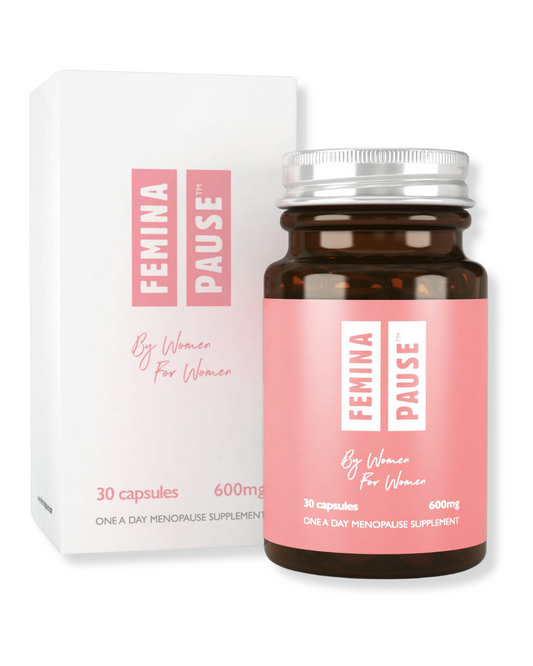
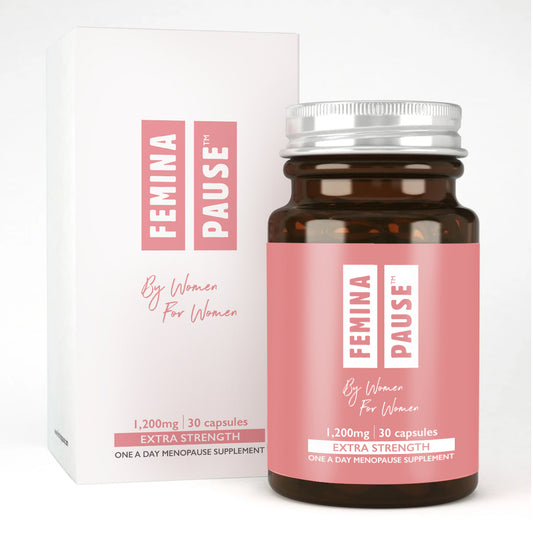
Likewise, beginning a supplement doesn't automatically mean stopping prescribed medication. Feminapause can be taken alongside HRT. The point of this article isn't: "Your patch is unavailable, so replace it with Feminapause." They are not equivalent products. The point is much broader: women deserve to know that hormone replacement isn't the only framework through which menopause support can be approached, and that one genuine advantage of building a non-hormonal, direct-to-you routine is having more control over the support you choose.
Maybe "What Works?" Isn't the Only Question Worth Asking
For years, menopause discussions have quite rightly focused on efficacy — what works, what reduces symptoms, what does the research show. Those questions matter enormously. But real life introduces other questions too: how easy is it to access? How easy is it to continue? How complicated is the routine? Do you need appointments? Does it fit your preferences? Can you maintain it consistently? And how much mental energy does managing it require?
The "best" menopause support isn't necessarily identical for every woman because women don't only have different symptoms — they have different priorities. For one woman, prescription HRT may remain absolutely worth navigating occasional supply difficulties. For another, the appeal of a reliable, non-hormonal menopause routine she controls herself may be enormous. Both deserve accurate information.
The Bottom Line
Yes, some UK women really are experiencing difficulties obtaining particular HRT products. As of August 2026, NHSBSA continues to list active Serious Shortage Protocols for several Estradot estradiol patch strengths, reflecting genuine ongoing supply disruption rather than social-media rumour. At the same time, HRT prescribing has grown dramatically in England as awareness and treatment uptake have increased.
Pharmacists and prescribers have mechanisms for dealing with shortages, and alternative products may often be available. But that doesn't make the frustration and anxiety women feel when their familiar medication is unavailable any less real.
Perhaps the wider lesson is that menopause support should give women more control, not less. For women who want a non-hormonal approach, that can mean building a routine around nutrition, movement, sleep, strength, psychological wellbeing and carefully chosen supplements they can access directly.
Menopause itself can be unpredictable enough. Your support routine doesn't have to be.