



FDA Removes HRT Black Box Warnings: Is Hormone Replacement Therapy Safe Now?

For more than two decades, hormone replacement therapy (HRT) has been surrounded by questions, conflicting headlines and concerns about its safety.
Does HRT increase breast cancer risk? Could it cause heart problems? And is taking hormones during menopause really worth it?
Now, the conversation is changing again.
In November 2025, the US Food and Drug Administration (FDA) announced that it was moving to remove several prominent safety warnings from menopause hormone therapy products. In February 2026, the agency approved the first six updated product labels.
For millions of women who remember the alarming HRT headlines of the early 2000s, this has raised an understandable question:
If HRT was considered risky enough to carry serious warnings for over 20 years, what's changed?
And perhaps more importantly, does removing those warnings mean HRT is now completely safe?
The answer is more complicated than the headlines might suggest.
At Feminapause, we believe women deserve to understand the full picture, not simply be told which approach to menopause they should choose.
So, let's look at what the FDA actually changed, why those warnings existed in the first place, what the latest science tells us, and where non-hormonal menopause support fits into the conversation.
What Has the FDA Actually Changed About HRT?
First, let's clear up a common misunderstanding.
The FDA has not declared hormone replacement therapy risk-free.
What it has done is change how certain risks are communicated on prescription hormone therapy products in the United States.
Previously, many HRT medications carried what's known as a boxed warning, often called a black box warning.
This is the FDA's most prominent type of medication safety warning, designed to draw attention to potentially serious risks.
In November 2025, the FDA requested changes to these warnings. The first updated labels were approved on 12 February 2026.
The changes include:
-
Removing statements about cardiovascular disease, breast cancer and probable dementia from the prominent boxed warning.
-
Retaining relevant cardiovascular and breast cancer risk information elsewhere in the prescribing information.
-
Keeping the boxed warning about endometrial cancer for systemic oestrogen-only products.
-
Removing the blanket recommendation to use HRT for the shortest possible duration.
-
Encouraging more individualised treatment decisions based on factors including age, medical history and time since menopause.
The changes apply across different categories of menopausal hormone therapy, although individual product labels are being updated through the regulatory process.
And there's another important distinction: these are US regulatory changes. They do not automatically change UK prescribing guidelines or the information supplied with HRT products in Britain.
So why has the FDA reconsidered warnings that have existed for more than two decades?
To understand that, we need to go back to 2002.
Why Did HRT Carry Black Box Warnings in the First Place?
In the 1990s, hormone replacement therapy was widely prescribed to women experiencing menopause.
Beyond managing symptoms such as hot flushes and night sweats, there was considerable interest in whether HRT might help prevent age-related conditions, particularly heart disease.
Then came a landmark study that changed the menopause conversation almost overnight.
The 2002 Women's Health Initiative Study
The Women's Health Initiative (WHI) was one of the largest women's health research programmes ever conducted.
Its hormone therapy trials investigated the potential benefits and risks of different hormone treatments in postmenopausal women.
In July 2002, researchers announced that the trial involving combined oestrogen and progestin therapy had been stopped early.
Why?
Because the overall balance of risks and benefits had crossed a predefined safety threshold.
The findings raised concerns about increased risks of conditions including:
-
Breast cancer
-
Blood clots
-
Stroke
-
Coronary heart disease
The combined hormone treatment also showed benefits, including fewer hip fractures and cases of colorectal cancer, but those benefits did not outweigh the overall concerns under the study's assessment.
A separate trial involving oestrogen alone continued for longer and produced a different pattern of findings.
Nevertheless, the resulting headlines were dramatic.
Women were suddenly being told that a treatment many had used for years could carry serious health risks.
Prescriptions declined, public confidence suffered, and in 2003 the FDA began introducing stronger safety warnings across menopausal hormone therapy products.
For many women, the message they took away was simple: HRT might be dangerous.
But was the research quite that straightforward?
What Have We Learned Since the Original HRT Study?
One of the most important developments in menopause research has been a better understanding of who was studied, which hormones were used, and when treatment began.
These details matter enormously.
1. The Age of the Women Studied
The average age of participants in the WHI hormone trials was approximately 63.
That's significant because many women begin experiencing menopause symptoms considerably earlier, often during their late forties or early fifties.
A woman beginning hormone therapy at 51 may have a different risk profile from a woman starting treatment at 68.
Subsequent research has increasingly explored this distinction.
Current menopause guidance generally considers the benefit-risk balance of systemic HRT more favourable for many otherwise healthy women who begin treatment before age 60 or within 10 years of menopause, provided they have no contraindications.
However, that doesn't mean treatment is automatically safe for everyone in this age group.
2. Not All HRT Is the Same
Another important detail is the type of hormones used in the original trials.
The WHI studied particular oral hormone formulations, including conjugated equine oestrogens and medroxyprogesterone acetate.
Today, women may be prescribed different preparations, including oestradiol patches, gels, sprays or tablets, alongside appropriate progesterone or progestogen where needed.
These treatments are not necessarily identical in how they affect the body.
For example, research suggests that transdermal oestrogen, delivered through the skin, may carry a lower blood clot risk than oral oestrogen.
But it's important not to overinterpret this.
We do not have equally extensive long-term randomised trial evidence for every modern hormone formulation.
And newer does not automatically mean risk-free.
3. Timing May Influence Risk
Researchers have also examined what's known as the timing hypothesis.
This explores whether beginning hormone therapy closer to menopause may produce a different cardiovascular risk profile than starting many years later.
The evidence suggests that age and time since menopause are important considerations when assessing treatment.
This has helped move clinical guidance away from treating all women as though they share exactly the same risk profile.
Instead, decisions increasingly consider the individual.
The important lesson?
The original WHI research wasn't simply meaningless or wrong. It identified genuine safety concerns.
What has changed is our understanding of how those findings should be applied to different women and different hormone therapies.
Does HRT Still Increase Breast Cancer Risk?
This is understandably one of the biggest questions women are asking following the FDA announcement.
And it deserves a clear answer.
Yes, certain forms of hormone replacement therapy can still increase breast cancer risk.
The removal of the FDA's boxed warning does not change that underlying evidence.
Breast cancer risk depends on several factors, including the type of hormone therapy, how long it is used, a woman's age and her individual medical history.
Combined oestrogen-progestogen therapy has been associated with an increased breast cancer risk, particularly with longer use.
Oestrogen-only therapy has a different risk profile and is generally prescribed to women who have had a hysterectomy.
Some findings from the WHI oestrogen-only trial have even suggested lower breast cancer incidence in that particular study population.
However, these results should not be interpreted as proof that oestrogen prevents breast cancer or that all oestrogen-only treatments carry the same risks.
Family history, previous breast cancer, breast health and other individual factors still matter.
And women with a history of certain hormone-sensitive cancers may be advised against systemic HRT.
The bottom line: The FDA has changed the prominence and presentation of some warnings. It has not established that breast cancer risks no longer exist.
What About Blood Clots, Heart Disease and Stroke?
These risks also remain relevant.
The WHI researchers themselves responded to the FDA's 2025 announcement by emphasising that their original randomised trials continue to provide important evidence about oral hormone therapy.
Their findings included increased risks of stroke and blood clots with the oral hormone treatments studied.
They also found that oral hormone therapy did not prevent heart attacks across the overall trial population.
However, modern clinical decision-making recognises that risks may differ according to:
-
Whether oestrogen is taken orally or through the skin.
-
The woman's age and cardiovascular health.
-
Whether she smokes.
-
Her history of blood clots or stroke.
-
The type and duration of hormone treatment.
-
How long it has been since menopause began.
For some women, the benefits of HRT may outweigh the risks.
For others, existing medical conditions or personal risk factors may make particular hormone treatments unsuitable.
That's why an individual medical assessment remains essential.
What About Dementia?
Dementia was another condition mentioned in the original FDA boxed warnings.
The evidence behind this warning came partly from research involving women aged 65 and older.
These findings cannot simply be applied to every woman beginning HRT around the natural age of menopause.
However, removing the prominent warning should not be interpreted as evidence that HRT prevents dementia.
At present, systemic hormone therapy is not recommended specifically to prevent dementia.
This is another example of why headlines about HRT being either completely safe or completely dangerous fail to capture the scientific complexity.
So, Is HRT Safe in 2026?
For many women, HRT can be an effective and appropriate treatment for troublesome menopause symptoms.
It remains one of the most effective medical treatments for hot flushes and night sweats, and it can also help prevent bone loss in appropriate patients.
But safety is not a simple yes-or-no question.
A treatment may be suitable for one woman and inappropriate for another.
The key considerations include age, symptoms, medical history, treatment type, dose, route of administration and individual preferences.
Some women find that HRT makes a significant difference to their quality of life.
Others cannot take it because of medical contraindications, experience unwanted side effects, or simply prefer not to use hormone therapy.
And that brings us to an important part of the menopause conversation that deserves just as much attention.
What If You Don't Want to Take HRT?
One of the positive outcomes of the renewed HRT discussion is that more women are asking questions about their menopause care.
But we believe the conversation should be bigger than one treatment.
Women should not feel that managing menopause successfully depends on choosing HRT.
There are many reasons a woman might explore a non-hormonal approach.
She may have been advised against certain hormone treatments.
She may have experienced side effects.
She may be managing milder symptoms and prefer to begin with lifestyle changes.
Or she may simply feel more comfortable exploring other options.
All of these reasons deserve to be heard.
Natural and Non-Hormonal Ways to Support Yourself Through Menopause
A non-hormonal menopause routine can include several approaches, depending on your needs.
Regular movement and strength training
Resistance exercise, walking and other forms of physical activity can help support muscle strength, bone health, cardiovascular fitness and general wellbeing during midlife.
Prioritising sleep
A consistent sleep routine, a comfortable bedroom temperature and reducing factors that disrupt sleep can all contribute to better rest.
Supporting your nutritional needs
A balanced diet containing sufficient protein, fibre, calcium and other essential nutrients becomes increasingly important as women age.
Managing stress and emotional wellbeing
Mindfulness, relaxation techniques, cognitive behavioural therapy and maintaining meaningful social connections may help women navigate some of the emotional and practical challenges of menopause.
Considering appropriate non-hormonal treatments
There are also evidence-based non-hormonal prescription treatments for certain menopause symptoms. A healthcare professional can explain which may be suitable.
Choosing supplements thoughtfully
Food supplements can form part of a wider wellbeing routine, particularly where they provide nutrients with established physiological functions.
However, not every supplement marketed for menopause has convincing evidence for treating menopausal symptoms.
Natural does not automatically mean safe, and supplements should not be considered equivalent to prescribed HRT.
The goal is to make informed choices rather than follow the loudest claims.
Where Does Feminapause Fit Into the Menopause Conversation?
At Feminapause, our belief has always been that women deserve choices.
We were created by women who understood how challenging menopause could feel and wanted to develop a thoughtful, non-hormonal supplement for everyday wellbeing.
Our approach is centred around a carefully selected formula rather than an unnecessarily long ingredient list.
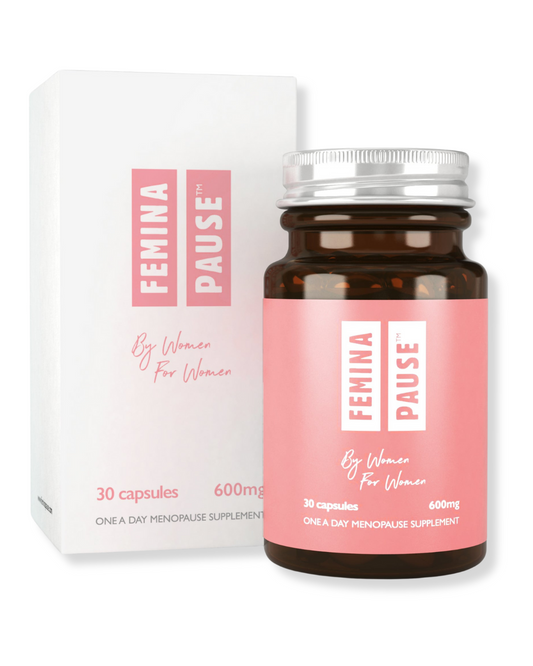
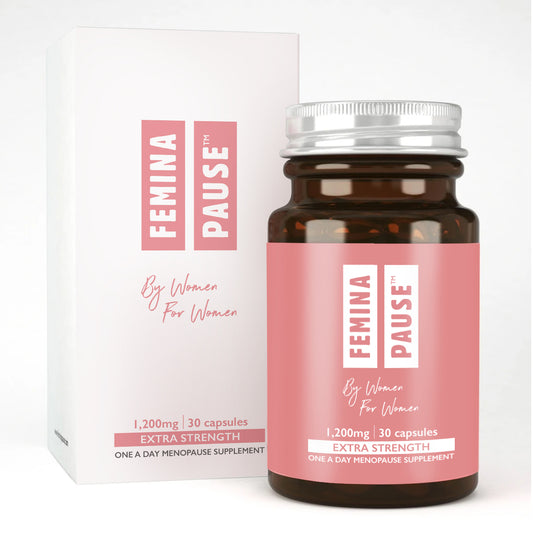
Feminapause Original Formula combines:
Vitamin B6
Vitamin B6 contributes to the regulation of hormonal activity and normal psychological function.
Vitamin B12
Vitamin B12 contributes to the normal functioning of the nervous system and helps reduce tiredness and fatigue.
Full-spectrum CBD
Our formula contains full-spectrum CBD, blended with MCT oil. CBD is a non-hormonal ingredient, and studies have demonstrated CBDs role in fostering better homeostasis in the body, allowing for menopause symptoms like hot flashes, night sweats, insomnia, anxiety and more to be managed comprehensively.
MCT oil
A coconut-derived carrier oil used in our formulation.
Our capsules are manufactured in the UK and independently laboratory tested, with an emphasis on ingredient transparency and quality.
Feminapause is a food supplement, not a medicine or a replacement for HRT.
We don't believe every woman needs the same menopause routine, and we don't believe women should feel pressured into one particular approach.
For women who prefer a non-hormonal daily supplement, Feminapause offers a considered option to explore as part of their wider wellbeing routine.
And for women already taking HRT, supplements should only be combined with prescribed treatment after checking with a GP or pharmacist, particularly because CBD can interact with certain medicines.
Discover Feminapause Original Formula
What the FDA's HRT Decision Really Tells Us About Women's Health
Perhaps the most interesting part of this story isn't simply that the FDA has changed a warning.
It's what the decision reveals about the evolution of women's healthcare.
Research develops. Evidence is re-examined. Clinical guidance changes as our understanding improves.
And sometimes, long-standing assumptions need to be challenged.
But good science also requires us to acknowledge what hasn't changed.
Some risks associated with hormone therapy remain real.
Some women benefit considerably from HRT.
Others need, or prefer, different approaches.
These statements can all be true at the same time.
For too long, menopause has been discussed in extremes.
Women have been told to endure their symptoms, fear certain treatments, embrace particular products or accept that one solution must be right for everyone.
We believe women deserve better.
They deserve access to reliable research, balanced conversations and a range of appropriate options.
Because menopause isn't a competition between hormone therapy and natural support.
It's a deeply individual experience.
And every woman deserves to feel informed, supported and confident in the decisions she makes.
Frequently Asked Questions About the FDA HRT Changes
Has the FDA removed all HRT black box warnings?
No. The FDA requested the removal of certain warnings relating to cardiovascular disease, breast cancer and probable dementia. It retained the boxed warning about endometrial cancer for systemic oestrogen-only products. Individual medication labels are being updated through the regulatory approval process.
Why did the FDA remove the HRT black box warning?
The FDA reconsidered the warnings after reviewing scientific evidence, including research published since the original Women's Health Initiative trials. The agency concluded that the prominent warnings did not adequately communicate differences between treatment types, patient groups and individual risk profiles.
Does HRT still cause breast cancer?
Certain hormone therapy regimens are associated with an increased risk of breast cancer, particularly combined oestrogen-progestogen therapy used over longer periods. Risk varies depending on the treatment and individual circumstances. The FDA's label changes do not eliminate these concerns.
Is HRT safer if you start before 60?
For many otherwise healthy women who begin systemic HRT before age 60 or within 10 years of menopause, the overall balance of benefits and risks is considered more favourable. However, individual contraindications and medical history remain important.
Is HRT safer as a patch or gel?
Transdermal oestrogen, delivered through patches or gels, may carry a lower blood clot risk than oral oestrogen. However, safety also depends on other factors, including whether a progestogen is required and a woman's individual health profile.
Are the new FDA HRT guidelines the same in the UK?
No. The FDA regulates medicines in the United States. UK medicines are regulated by the Medicines and Healthcare products Regulatory Agency (MHRA), and UK prescribing decisions follow relevant national clinical guidance. US labelling changes do not automatically apply to UK medicines.
Can you manage menopause without HRT?
Yes. Menopause can be managed through a range of hormonal and non-hormonal approaches, including lifestyle measures, certain non-hormonal prescription treatments and appropriate nutritional support. The most suitable approach depends on individual symptoms, health considerations and preferences.
Is Feminapause an alternative to HRT?
Feminapause is a non-hormonal food supplement designed for women navigating menopause and perimenopause. It is not a clinically equivalent replacement for HRT and is not intended to treat or prevent menopause-related medical conditions. It can be considered as part of an everyday wellbeing routine.
Final Thoughts: Your Menopause, Your Choice
The FDA's decision is an important development in women's healthcare, but it doesn't mean the menopause conversation is settled.
What it reinforces is the importance of looking beyond headlines, understanding individual risks and recognising that no two menopause experiences are identical.
Whether you're considering HRT, already taking it, exploring non-hormonal approaches or simply trying to understand your options, you deserve information that empowers you rather than frightens you.
At Feminapause, that's the conversation we want to be part of.
Because informed women make empowered choices. And your menopause journey should always be your own.
Medical disclaimer: This article is for educational purposes only and does not constitute medical advice. Do not start, stop or change prescribed hormone therapy without consulting a qualified healthcare professional. Feminapause is a food supplement and is not intended to diagnose, treat, cure or prevent disease. Food supplements should not replace a varied, balanced diet or appropriate medical care.