



The Best Vitamins for Menopause: What Does Your Body Actually Need?

Walk into almost any health shop and you’ll find an entire shelf promising to make menopause easier.
Magnesium. Vitamin D. B vitamins. Calcium. Iron. Omega-3. Multivitamins containing twenty, thirty or sometimes forty different ingredients.
It creates an understandable question: what vitamins do you actually need during menopause?
Because your nutritional needs don’t suddenly become unrecognisable when you enter perimenopause. You don’t automatically become deficient in a catalogue of vitamins because your oestrogen begins fluctuating, and swallowing the largest possible collection of nutrients isn’t necessarily better than choosing a smaller number for a clear reason.
What does change is the context in which nutrition is operating. Menopause coincides with changes in bone turnover, body composition, sleep, energy, cardiovascular risk and muscle mass. Some women also experience heavy periods during perimenopause, while changing diets, reduced appetite, digestive conditions or certain medications can affect nutritional status.
So rather than giving you another enormous list of “menopause vitamins”, a more useful question is this:
Which nutrients deserve particular attention during menopause, what do they actually do, and when is supplementation genuinely worthwhile?
There Isn’t a Vitamin That Stops Menopause
We should probably get this out of the way first.
No vitamin can prevent menopause, restore your ovaries to their premenopausal state or single-handedly eliminate every symptom caused by changing reproductive hormones.
That doesn’t make nutrition irrelevant. Far from it.
Menopause is a particularly important time to think about nutrition because you’re not simply trying to manage today’s hot flush or tomorrow’s tiredness. You’re also protecting the body you’ll be living in twenty or thirty years from now.
Bone density matters. Muscle matters. Cardiovascular health matters. Energy metabolism matters. Nervous-system function matters.
That’s why the best approach isn’t necessarily asking, “Which vitamin treats menopause?” It’s asking: “What does my body need more support with during this stage of life?” That produces a very different—and considerably more useful—shopping list.
1. Vitamin B6: Small Vitamin, Surprisingly Broad Role
Vitamin B6 tends to receive far less attention than magnesium or vitamin D in conversations about menopause, which is surprising when you look at what it actually does.
Its active coenzyme form, pyridoxal-5'-phosphate, participates in more than 100 enzyme reactions in the body, particularly those involved in amino-acid metabolism.
For women going through menopause, several of its recognised physiological functions are particularly relevant. Vitamin B6 contributes to normal energy-yielding metabolism, normal functioning of the nervous system, normal psychological function, normal red blood cell formation, regulation of hormonal activity, and the reduction of tiredness and fatigue.
B6 is involved in normal hormonal regulation and several other systems that remain important while the body is adapting to hormonal change.
Vitamin B6 occurs naturally in foods including poultry, pork, fish, oats, bananas, peanuts and fortified cereals. For many women, a varied diet provides adequate amounts.
But when choosing a menopause supplement, B6 is one of the nutrients that genuinely earns its place rather than simply making an ingredient list look impressive.
2. Vitamin B12: Particularly Important When Energy Feels Different
If B6 is under-discussed, B12 is frequently misunderstood.
Vitamin B12 contributes to normal red blood cell formation, normal nervous-system and psychological function, normal energy-yielding metabolism and the reduction of tiredness and fatigue.
But B12 doesn’t work like caffeine. Taking B12 doesn’t automatically give somebody who already has sufficient B12 an enormous burst of energy. Instead, adequate B12 allows essential physiological processes to function normally.
The distinction becomes particularly important because genuine B12 deficiency can cause significant fatigue. More severe deficiency can also produce neurological symptoms including pins and needles, cognitive changes and balance problems.
B12 is naturally concentrated in animal-derived foods such as meat, fish, eggs and dairy products, while fortified foods and supplements are particularly important for many people following vegan diets.
Absorption matters too. You can consume B12 and still develop deficiency if your body cannot absorb it effectively, as can happen with pernicious anaemia and certain gastrointestinal conditions.
So when menopause fatigue appears, B12 deserves consideration—but unexplained exhaustion shouldn’t automatically be treated by buying a supplement and assuming the problem is solved.
3. Vitamin D: Think Beyond Symptoms and Look at Your Bones
Vitamin D isn’t particularly glamorous. It won’t dominate menopause conversations in the way that hot-flush remedies do. But from a long-term health perspective, it’s one of the nutrients women should take seriously.
Oestrogen has an important relationship with bone. As oestrogen levels fall around menopause, bone loss accelerates, which contributes to the increasing risk of osteoporosis later in life.
Vitamin D contributes to the absorption and utilisation of calcium and helps maintain normal bones and muscle function.
This is particularly relevant in the UK because sunlight is one of our principal sources of vitamin D. During autumn and winter, the NHS recommends that adults consider taking a daily vitamin D supplement because sunlight isn’t strong enough for the skin to produce sufficient amounts reliably.
This isn’t really about “treating menopause”. It’s about recognising that menopause is a point at which future bone health deserves more attention than it probably received at 25.
4. Calcium: Important—But Don’t Automatically Reach for a Supplement
Calcium and menopause are frequently discussed together, and with good reason.
Around 99% of the body’s calcium is stored in bones and teeth, and adequate calcium intake is essential for maintaining normal bone health.
However, there’s an important distinction between needing calcium and needing a calcium supplement.
Many women can obtain sufficient calcium through food. Dairy products are obvious sources, but calcium can also be obtained through fortified plant milks, tofu made with calcium, certain fish eaten with their bones, green vegetables and other foods.
Rather than automatically buying a high-dose calcium tablet because you’ve entered menopause, it’s more sensible to assess your dietary intake first.
Your bones also don’t exist in isolation. Resistance exercise, weight-bearing activity, vitamin D, protein intake, smoking status and alcohol consumption all influence skeletal health.
A calcium supplement can’t compensate for everything else.
5. Folate: Not Just a Pregnancy Vitamin
Most women associate folate with pregnancy. Its role extends considerably further.
Folate contributes to normal blood formation, psychological function, immune function and the reduction of tiredness and fatigue. It also participates in normal homocysteine metabolism alongside vitamins including B6 and B12.
Good dietary sources include leafy green vegetables, broccoli, Brussels sprouts, chickpeas, kidney beans and fortified foods.
For most women eating a varied diet, supplementation specifically because of menopause isn’t automatically necessary. But folate is another reminder that B vitamins operate as part of interconnected metabolic systems rather than independent miracle ingredients.
6. What About Iron?
Iron is where menopause nutrition becomes particularly interesting because the answer changes depending on where you are in the transition.
During perimenopause, periods can become considerably heavier for some women. Repeated heavy bleeding can contribute to iron deficiency, and iron deficiency can produce symptoms including exhaustion, weakness, breathlessness, palpitations and difficulty concentrating.
Those symptoms can look remarkably similar to symptoms women already associate with menopause.
But after menstruation stops, regular menstrual iron loss disappears and iron requirements generally decrease. That’s why iron isn’t something to take simply “because you’re menopausal”.
If you’re experiencing unusually heavy periods or persistent fatigue, speak to your healthcare professional. A blood test can help establish whether iron deficiency or anaemia is actually present.
Taking iron unnecessarily isn’t harmless, and this is a perfect example of why more supplements do not automatically equal better menopause care.
7. Magnesium: Useful Nutrient, Enormous Marketing Hype
Magnesium has almost become the unofficial mineral of menopause social media. You’ll see claims that it fixes sleep, anxiety, hot flushes, weight gain, headaches, constipation, muscle cramps and practically anything else you can name.
The reality is more nuanced.
Magnesium is unquestionably essential. It participates in hundreds of biochemical reactions and contributes to normal muscle and nervous-system function, energy-yielding metabolism, electrolyte balance and maintenance of normal bones. That’s a very good reason to obtain enough magnesium.
But that is not evidence that magnesium is a universal treatment for menopause.
Foods including nuts, seeds, wholegrains, legumes and leafy vegetables provide magnesium, and supplementation may be appropriate for some people depending on diet and individual circumstances.
It’s more useful to understand what magnesium genuinely does than to expect it to solve every symptom on a menopause checklist.
What Are the Top 3 Vitamins for Menopause?
If you want the simplest possible answer, the conversation can be narrowed to three particularly useful areas: B vitamins—particularly B6 and B12—for normal energy metabolism, nervous-system and psychological function and reducing tiredness and fatigue; vitamin D for normal bone and muscle health; and adequate calcium intake for maintaining normal bones.
Technically calcium is a mineral rather than a vitamin, but excluding it from a conversation about menopause nutrition simply to make the title mathematically tidy wouldn’t make much sense.
And the priority for you may be different. Someone with B12 deficiency needs something different from somebody with low vitamin D. A woman having extremely heavy perimenopausal periods needs a different assessment from a woman ten years into postmenopause.
There is no intelligent one-size-fits-all menopause supplement regime.
Why Feminapause Doesn’t Contain 30 Different Vitamins
This is something we feel strongly about. A huge ingredient list looks impressive. It doesn’t necessarily mean you’ve bought a better product.
Some menopause supplements contain an extraordinary number of vitamins, minerals, herbs and extracts. Sometimes the quantities are tiny. Sometimes ingredients are included despite limited evidence. And sometimes consumers have absolutely no idea what they’re actually taking or why.
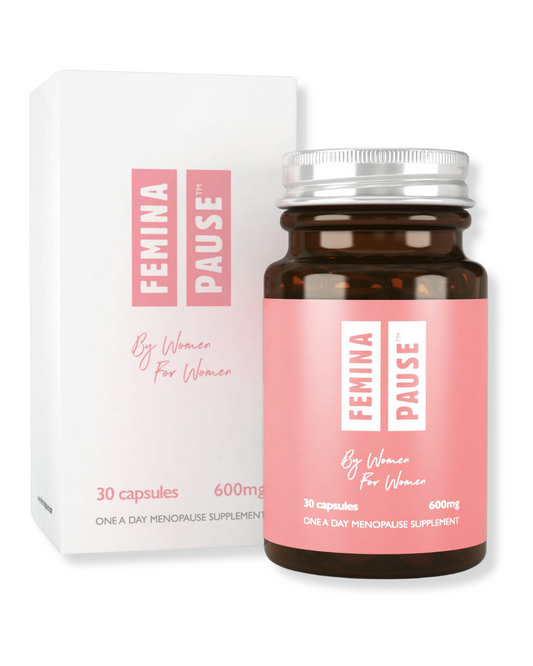
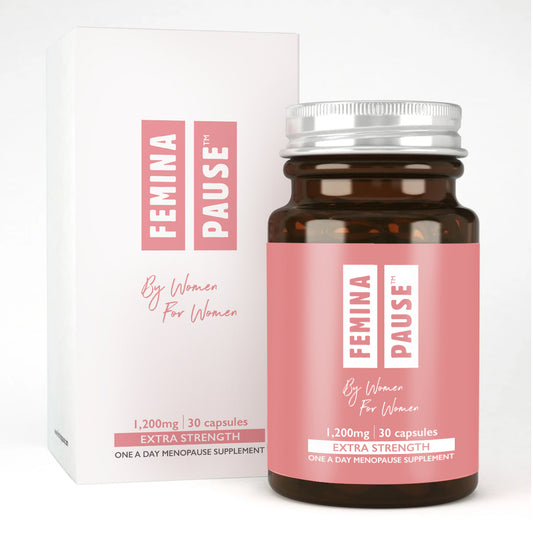
We prefer a more considered approach. Feminapause combines full-spectrum CBD with vitamin B6, vitamin B12 and MCT oil in a once-daily formulation.
B6 and B12 weren’t added because “B vitamins” look good on the packaging. They’re there because they perform recognised functions that make sense in the context of menopause: both contribute to normal energy-yielding metabolism, nervous-system and psychological function and the reduction of tiredness and fatigue, while B6 additionally contributes to the regulation of hormonal activity.
CBD provides the distinctive non-hormonal foundation of the Feminapause formulation, while MCT oil acts as the carrier.
For women who want a straightforward, non-hormonal alternative to an enormous menopause multivitamin, this offers a compelling approach: fewer ingredients, deliberately chosen, in one daily capsule.
That doesn’t mean women should stop thinking about vitamin D, calcium, magnesium or the quality of their diet. Quite the opposite. A menopause supplement should complement good nutrition rather than attempt to replace it.
Should You Take a Multivitamin During Menopause?
Maybe—but don’t assume you need one.
If your diet is varied and you’re meeting your nutritional requirements, swallowing dozens of additional micronutrients every morning may provide little additional benefit.
A better strategy is to identify where your diet or circumstances may create genuine gaps.
Do you eat fish? Do you consume dairy or fortified alternatives? Do you eat animal products? Are your periods unusually heavy? Do you spend much time outdoors? Are you restricting food heavily in an attempt to lose weight? Do you have digestive problems that might interfere with nutrient absorption? Are you taking medications that affect particular nutrients?
Those questions tell us considerably more than the word “menopause” alone.
Vitamins Aren’t the Whole Menopause Plan
This may be the most important section of the article. You cannot supplement your way out of every consequence of menopause.
NICE specifically emphasises maintaining muscle mass and strength through physical activity and advises that bone health should be discussed as part of menopause care.
That means strength training matters. Eating enough protein matters. Not smoking matters. Sleep matters. Alcohol intake matters. Cardiovascular health matters. Nutrition matters.
Supplementation can sit alongside those foundations.
Some women will also choose HRT after discussing their individual benefits and risks with a healthcare professional. Others cannot take HRT, don’t want to take it, or prefer to begin by exploring non-hormonal approaches.
For that latter group in particular, there is considerable value in building a thoughtful routine around nutrition, movement, sleep, stress management and targeted non-hormonal support such as Feminapause, rather than assuming hormones are the only conversation worth having.
So, What Are the Best Vitamins for Menopause?
There isn’t one perfect menopause vitamin.
Vitamin D and calcium deserve particular attention because menopause marks an important turning point for bone health. B6 and B12 support normal energy metabolism, nervous-system and psychological function and help reduce tiredness and fatigue.
Iron becomes particularly relevant when heavy perimenopausal bleeding causes deficiency, while magnesium and folate remain important components of overall nutrition.
But the smartest menopause strategy isn’t filling your kitchen cupboard with every supplement somebody mentions on Facebook.
It’s understanding what your changing body actually needs.
Eat well. Protect your bones. Build muscle. Investigate persistent fatigue rather than simply accepting it. Correct genuine nutritional deficiencies. Prioritise sleep. And if you want additional menopause support, choose products whose ingredients you can actually understand.
That’s ultimately why Feminapause is deliberately focused.
Full-spectrum CBD. Vitamin B6. Vitamin B12. MCT oil. One capsule a day.
Not thirty ingredients competing for space on a label.
For women looking for a simple, non-hormonal way to add targeted menopause support to the foundations they’re already building, that simplicity is one of Feminapause’s greatest strengths.
Disclaimer: This article is intended for general information and isn’t a substitute for individual medical or nutritional advice. If you suspect a vitamin or mineral deficiency, have persistent unexplained fatigue, experience unusually heavy bleeding or take medicines that may interact with supplements, speak to a healthcare professional.