



Davina McCall, High Cholesterol & Menopause: Why HRT Isn't the Whole Answer to Heart Health

For years, the menopause conversation has been dominated by one hormone: oestrogen.
We've heard about its role in sleep, mood, bone health, hot flushes and, increasingly, cardiovascular health.
And while there's good reason to discuss the relationship between oestrogen and the heart, a recent revelation from one of Britain's most recognisable menopause advocates has highlighted something important.
Protecting women's hearts is far more complicated than simply replacing declining hormones.
In October 2026, television presenter and menopause campaigner Davina McCall revealed that she had been diagnosed with cardiovascular disease, having previously lived with high cholesterol.
Speaking openly about her experience, she raised an issue that many women may recognise: being reassured that higher levels of so-called "good cholesterol" could offset the bad.
Her story has sparked a wider conversation about cholesterol, heart disease and menopause.
But it also raises another question worth exploring.
If HRT is frequently discussed as beneficial for heart health, does taking it actually prevent cardiovascular disease?
And if not, what should women really be paying attention to?
At Feminapause, we believe these are exactly the conversations women deserve to have, without fear, judgement or oversimplified answers.
Let's unpack the science.
What Happened to Davina McCall?
In an episode of her Begin Again podcast released in October 2026, Davina McCall spoke with heart attack survivor Louise McGill in a discussion created in partnership with the British Heart Foundation.
During the conversation, Davina revealed that she had cardiovascular disease and had experienced high cholesterol for some time.
She also explained that she had previously understood her higher levels of good cholesterol to be balancing out the bad.
Her message to other women was to take cardiovascular health seriously and not dismiss potential warning signs.
It's an important message, particularly for women approaching or moving through menopause.
Davina has spent years helping to bring menopause into mainstream conversation. Her willingness to speak openly about another aspect of women's health is valuable.
But her experience also gives us an opportunity to examine some widespread assumptions about cardiovascular protection.
We do not know the complete details of Davina's medical history, cardiovascular diagnosis or treatment decisions. Her personal experience cannot establish whether any particular treatment succeeded or failed.
What it can do is remind us that even women who are proactive about their health can develop cardiovascular disease.
And that is a conversation worth having.
Why Does Cholesterol Matter More During Menopause?
Cholesterol is often discussed as though it's something harmful that we should eliminate.
But cholesterol itself isn't the enemy.
It's a waxy, fat-like substance that our bodies need to build cells, produce hormones and carry out essential functions.
The problem arises when certain cholesterol-carrying particles become elevated in the bloodstream, increasing the likelihood of fatty deposits developing in the arteries.
These deposits, known as plaques, can contribute to atherosclerosis, a condition that narrows or damages blood vessels and increases the risk of heart attacks and strokes.
What Happens to Cholesterol During Menopause?
Oestrogen plays a role in how the body processes fats and regulates several aspects of cardiovascular health.
As oestrogen levels decline during menopause, women may experience changes in their cholesterol profile.
These can include:
-
Rising LDL cholesterol levels.
-
Changes in HDL cholesterol.
-
Increased abdominal fat accumulation.
-
Changes in insulin sensitivity and blood sugar regulation.
-
Increased blood pressure in some women.
Not every woman experiences these changes, and ageing, genetics and lifestyle also contribute.
However, research increasingly recognises the menopause transition as an important time to reassess cardiovascular health.
And this matters because heart disease can develop quietly over many years, without obvious symptoms.
Good Cholesterol vs Bad Cholesterol: What Does It Actually Mean?
This is perhaps the most important part of the conversation sparked by Davina's experience.
Most of us have heard cholesterol divided into two categories.
Good cholesterol and bad cholesterol.
It sounds straightforward.
But the reality is more complicated.
LDL Cholesterol: The So-Called Bad Cholesterol
LDL stands for low-density lipoprotein.
Its job is to transport cholesterol around the body.
However, when there are too many LDL particles circulating in the bloodstream, they can contribute to cholesterol accumulating within artery walls.
Over time, this can lead to plaque formation and increase cardiovascular risk.
Higher LDL cholesterol is an established causal risk factor for atherosclerotic cardiovascular disease.
This is why reducing elevated LDL is a central part of evidence-based heart disease prevention.
HDL Cholesterol: The So-Called Good Cholesterol
HDL stands for high-density lipoprotein.
It helps transport cholesterol away from tissues and back towards the liver, where it can be processed.
Generally, lower HDL levels are associated with increased cardiovascular risk.
But here's where the traditional explanation becomes misleading.
Having high HDL cholesterol does not automatically cancel out the risks associated with high LDL cholesterol.
HDL and LDL are not two opposing numbers that simply balance each other out.
Someone can have relatively high HDL and still have elevated LDL, arterial plaque or other cardiovascular risk factors.
In fact, very high HDL levels are not necessarily associated with additional protection, and simply raising HDL through medication has not consistently been shown to reduce cardiovascular events.
This is why doctors increasingly emphasise the overall cardiovascular risk profile rather than relying on one supposedly reassuring cholesterol measurement.
What About Triglycerides?
Triglycerides are another type of fat found in the blood.
They provide stored energy, but elevated levels can contribute to cardiovascular risk, particularly alongside other metabolic changes.
A comprehensive cholesterol test should therefore look beyond total cholesterol alone.
Why High Good Cholesterol Doesn't Erase the Bad
Imagine being told that your LDL cholesterol is elevated, but your HDL is also high.
It's easy to interpret that as reassuring.
After all, if one is good and the other is bad, surely they balance each other?
Unfortunately, that's not how cardiovascular risk works.
High LDL cholesterol can contribute to plaque formation regardless of whether HDL is also elevated.
Your risk also depends on factors such as blood pressure, smoking, diabetes, family history, age and existing cardiovascular conditions.
Other measurements can provide valuable information too.
Non-HDL cholesterol includes LDL and other potentially artery-damaging cholesterol-carrying particles.
Apolipoprotein B (ApoB) can help estimate the number of atherogenic lipoprotein particles circulating in the blood.
Lipoprotein(a), or Lp(a) is a largely inherited cardiovascular risk factor that may be elevated even in people who otherwise appear healthy.
Not everyone needs every additional test, but these measurements may be useful in certain circumstances.
The key takeaway is simple.
A reassuring HDL result should never be used in isolation to dismiss other cardiovascular risk factors.
Does HRT Prevent Heart Disease? Here's What the Evidence Actually Says
This is where the menopause conversation becomes particularly interesting.
You've probably heard that oestrogen has protective effects on the cardiovascular system.
And biologically, that is true in several important respects.
Oestrogen influences blood vessel function, cholesterol metabolism and other processes relevant to cardiovascular health.
But there's a crucial difference between understanding how a hormone works and proving that prescribing it prevents heart attacks.
A treatment can improve certain cardiovascular markers without necessarily preventing cardiovascular disease.
That's why we need to distinguish between potential benefits and proven preventive treatments.
What Does NICE Say About HRT and Heart Disease?
The National Institute for Health and Care Excellence (NICE) provides clinical guidance used across the NHS.
Its updated menopause guidance, published in November 2024, includes an important recommendation:
Combined and oestrogen-only HRT should not be offered specifically for the primary or secondary prevention of cardiovascular disease.
In plain English, this means HRT should not be prescribed solely to prevent someone developing cardiovascular disease or to prevent further cardiovascular events in someone who already has it.
That does not mean HRT is necessarily harmful to the heart.
NICE also reports that, in women without existing coronary heart disease, combined or oestrogen-only HRT does not increase coronary heart disease risk in the populations assessed.
Other evidence suggests that the timing, type and route of HRT may influence cardiovascular outcomes.
Some studies indicate potential cardiovascular benefits when hormone therapy is initiated closer to menopause, while oral formulations can carry particular clotting and stroke risks.
However, evidence of potential benefit is not the same as proof that HRT should be used as a heart disease prevention strategy.
The Difference Between Treating Menopause and Preventing Heart Disease
HRT can be highly effective for managing symptoms such as hot flushes and night sweats.
It can also help protect bone health in appropriate women.
These are recognised reasons to consider treatment.
But preventing cardiovascular disease requires attention to a much wider set of risk factors.
That includes cholesterol, blood pressure, diabetes, smoking, family history and, where appropriate, preventive medication.
HRT may be one part of a woman's healthcare, but it should never be mistaken for a complete cardiovascular prevention plan.
And equally, choosing not to take HRT does not mean a woman is neglecting her heart health.
Does Davina McCall's Diagnosis Prove HRT Doesn't Protect the Heart?
No. And it's important to be precise about why.
Davina's diagnosis does not prove that HRT is ineffective, nor does it establish the role of any treatment in her individual cardiovascular risk.
We cannot draw those conclusions from a public interview.
But her story does illustrate a broader truth.
No single menopause treatment can guarantee protection against cardiovascular disease.
Even women who exercise regularly, eat well, receive appropriate medical care or use hormone therapy can develop heart conditions.
Genetics, age, cholesterol exposure over time and many other factors influence cardiovascular risk.
This is why we believe the menopause conversation needs to move beyond the idea that any single treatment is the answer to every aspect of women's health.
Whether a woman takes HRT or not, cardiovascular prevention deserves its own attention.
The Cholesterol Numbers Women Should Understand
If you've ever received a cholesterol blood test and been told your results are fine without understanding the numbers, you're certainly not alone.
Here are the measurements worth knowing.
Total Cholesterol
This measures the overall amount of cholesterol in your blood.
The NHS gives a general guide of below 5 mmol/L for healthy adults, although individual targets vary.
LDL Cholesterol
This is one of the most important measurements for assessing the risk of plaque forming in arteries.
The appropriate target depends on your overall cardiovascular risk and whether you already have cardiovascular disease.
HDL Cholesterol
The NHS generally lists HDL above 1.2 mmol/L as a healthy guide for women.
However, higher HDL should not be interpreted as permission to ignore elevated LDL.
Non-HDL Cholesterol
This measures your total cholesterol minus your HDL cholesterol.
For generally healthy adults, the NHS gives a guide of below 4 mmol/L, although lower targets may be appropriate for people at increased risk.
Triglycerides
These are another important part of your blood lipid profile, especially when considering metabolic health.
Your GP can explain what your results mean in the context of your individual circumstances.
Remember, a cholesterol result is not a diagnosis on its own.
It is one piece of a larger cardiovascular health picture.
Five Questions Worth Asking Your GP About Heart Health During Menopause
One of the most empowering things women can do is begin asking more specific questions about their cardiovascular health.
You don't need to wait until you experience symptoms.
Consider discussing the following with your GP.
1. Can I have a full lipid profile?
Ask about LDL, HDL, non-HDL cholesterol and triglycerides rather than focusing solely on total cholesterol.
2. What is my overall cardiovascular risk?
In the UK, clinicians commonly use QRISK3 to estimate the likelihood of a cardiovascular event over the next 10 years in eligible adults.
It takes multiple risk factors into account, rather than relying on cholesterol alone.
3. Should my family history change how my results are interpreted?
A family history of premature heart disease or unusually high cholesterol may suggest an inherited risk that deserves further investigation.
4. Would additional testing, such as Lp(a), be useful for me?
This may be especially relevant if you have a strong family history of cardiovascular disease or risk that isn't fully explained by standard cholesterol results.
5. What can I do to reduce my risk, and do I need treatment?
Your GP can discuss appropriate lifestyle changes and whether cholesterol-lowering medication, blood pressure treatment or further investigations are needed.
For some women, medication is an important and evidence-based part of prevention.
There is no benefit in delaying necessary treatment in the hope that lifestyle measures or supplements alone will resolve significant cardiovascular risk.
Can You Reduce Cholesterol Naturally During Menopause?
For many women, lifestyle changes can make a meaningful difference to cardiovascular health.
And the encouraging part is that these habits support much more than cholesterol alone.
Prioritise Fibre-Rich Foods
Soluble fibre can help lower LDL cholesterol by reducing cholesterol absorption.
Oats, barley, beans, lentils, fruit and vegetables are useful additions to a heart-conscious diet.
Choose Heart-Healthy Fats
Replacing some saturated fats with unsaturated fats can help improve LDL cholesterol levels.
Foods such as olive oil, nuts, seeds and oily fish can form part of a balanced eating pattern.
Make Strength Training Part of Your Routine
Resistance training helps preserve muscle mass as women age and can support metabolic health.
Combining strength training with regular aerobic exercise offers wider cardiovascular benefits.
Pay Attention to Blood Pressure
High blood pressure is a major cardiovascular risk factor and often causes no noticeable symptoms.
Regular checks are especially important during midlife.
Avoid Smoking and Prioritise Rest
Not smoking, limiting alcohol, maintaining a consistent sleep routine and addressing sleep problems can all contribute to long-term cardiovascular wellbeing.
However, lifestyle measures do not always overcome inherited or significantly elevated cholesterol.
Some women will need medical treatment even when they are already living healthily.
And that's an important distinction.
A healthy lifestyle is powerful, but it is not a guarantee against heart disease.
Where Does Feminapause Fit Into Women's Midlife Wellbeing?
At Feminapause, we believe that menopause support should never be reduced to a single product, hormone or treatment.
Women's health is interconnected.
Sleep, energy, emotional wellbeing, physical activity, nutrition and long-term medical health all deserve attention.
That's why we advocate for an informed, individual approach to menopause.
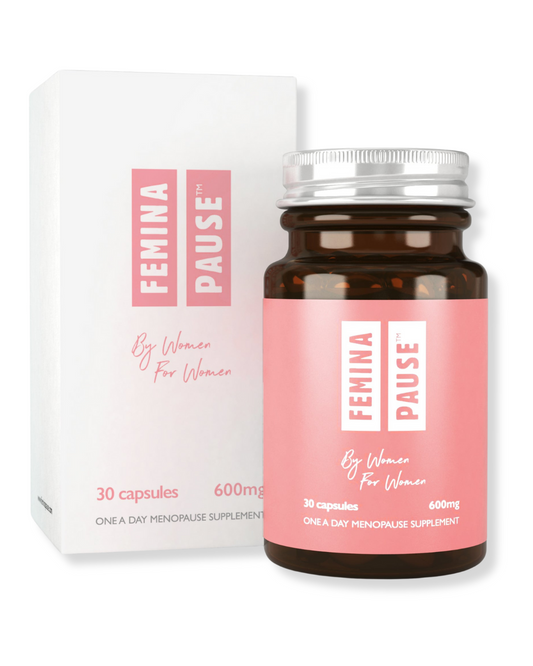
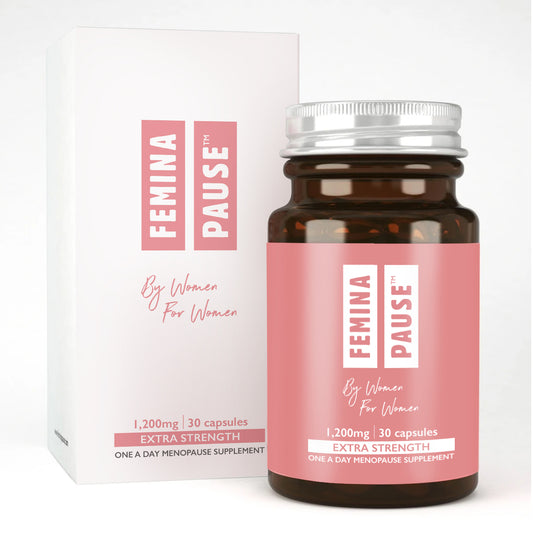
Feminapause Original Formula is a non-hormonal food supplement containing vitamins B6 and B12, full-spectrum CBD and MCT oil.
Vitamin B6 contributes to normal psychological function and the regulation of hormonal activity, while vitamin B12 contributes to normal energy-yielding metabolism and helps reduce tiredness and fatigue.
Our formula is designed to complement an everyday wellbeing routine, not replace medical assessment or treatment.
What we believe is that women deserve to explore different ways of supporting themselves through menopause while remaining fully informed about their medical needs.
For some women, that includes HRT.
For others, it may involve non-hormonal approaches.
For many, it involves a combination of lifestyle measures, medical care and thoughtfully chosen nutritional support.
The right approach is the one that is appropriate for your individual health, needs and preferences.
Explore Feminapause Original Formula
Why Women's Heart Health Needs a Bigger Conversation Than HRT
Davina McCall's openness about her cardiovascular diagnosis is an important reminder that women's heart health deserves far more attention.
For years, menopause discussions have understandably focused on symptoms such as hot flushes, disrupted sleep and mood changes.
But midlife is also an important opportunity to look at long-term health.
And while hormone therapy has a legitimate place in menopause care, we should be cautious about presenting it as the answer to every health concern associated with declining oestrogen.
Because women's cardiovascular health is influenced by far more than hormones alone.
We need conversations about cholesterol that go beyond good versus bad.
We need women to understand the importance of blood pressure, family history and metabolic health.
We need cardiovascular risk assessments that consider the whole person.
And we need women to feel confident asking questions when something about their health doesn't seem right.
Frequently Asked Questions
Does menopause cause high cholesterol?
Menopause can contribute to changes in cholesterol levels as oestrogen declines. LDL cholesterol may rise during the transition, although age, genetics, diet and other health factors also influence cholesterol.
Can high good cholesterol cancel out bad cholesterol?
No. High HDL cholesterol does not eliminate the cardiovascular risks associated with elevated LDL cholesterol. Both measurements should be interpreted alongside other risk factors.
Does HRT prevent heart disease?
HRT is not recommended specifically for preventing cardiovascular disease. Its effects on cardiovascular risk depend on factors including age, timing, formulation and individual medical history.
What cholesterol tests should menopausal women ask for?
A standard lipid profile includes total cholesterol, HDL, LDL and triglycerides, with non-HDL cholesterol often reported or calculated. Additional tests may be appropriate depending on individual risk.
What is lipoprotein(a)?
Lipoprotein(a), or Lp(a), is a largely inherited type of lipoprotein associated with increased cardiovascular risk when elevated. A clinician can advise whether testing would be useful.
Can you have heart disease even if you're fit and healthy?
Yes. Physical fitness and healthy habits can reduce cardiovascular risk, but they do not eliminate inherited, age-related or other medical risk factors.
Final Thoughts: Your Heart Deserves More Than Assumptions
Perhaps the most important lesson from the recent discussion around Davina McCall's diagnosis is that we should never mistake reassurance for a complete understanding of our health.
Having high good cholesterol doesn't automatically mean your arteries are protected.
Being physically active doesn't make you immune to cardiovascular disease.
And taking HRT, however beneficial it may be for certain menopause symptoms, does not remove the need to assess and manage other heart health risks.
The menopause conversation should never be about choosing sides.
It should be about understanding the evidence, recognising individual differences and making decisions based on the full picture.
At Feminapause, we'll continue to champion informed choices, non-hormonal wellbeing support and the importance of listening to women's experiences.
Because your menopause journey deserves more than a one-size-fits-all answer.
And your heart deserves to be taken seriously, whatever menopause path you choose.
Medical disclaimer: This article is for general educational purposes and is not a substitute for medical advice. If you have high cholesterol, cardiovascular symptoms or concerns about your heart health, speak to your GP or another qualified healthcare professional. If you experience possible heart attack symptoms, including persistent chest discomfort, breathlessness or pain spreading to the arm, jaw or back, seek emergency medical assistance. Do not stop or change prescribed medication without medical advice. Feminapause is a supplement, not a treatment for cardiovascular disease.